Employees can trust safety. Case Miilumachine.
Company: Miilumachine Oy
Location: Raahe, Finland
Fluids: Semi-synthetic microemulsion cutting fluid
Type of machines: Diverse range of CNC machines. Machine-specific individual fluid tanks of 1,000-2,000 litres.
Spesnes solutions in use:
- Spesnes Platform
- Microbial dip-slides subscription for weekly measurements
- StatusVision display
- digital pH meter
- pH accuracy package
Number of fluid tanks in the Platform: 13
“When fluid condition is continuously visible and documented, employees can trust safety. Spesnes Platform supports systematic monitoring and significantly improves occupational safety management.”

Miilumachine
Miilumachine is one of Finland's leading machine shops operating in Raahe, which offers competitive solutions with the help of professional staff and modern equipment. They have a long history as a family business and the development of operations has always been important to them. Whether it's investing in productivity or safety, the aim is always to find solutions to promote the right things.
Managing Director Kari Vimpari is also well aware of the actual costs of machining fluids and their effects on production and occupational health more broadly. That's why it's important to him that Miilumachine invests in this area.
“"The Spesnes Platform brought transparency to where it is needed most. When information is available to everyone, uncertainty disappears and unnecessary interruptions are reduced. Everyday life in production is clearer and calmer."
Spesnes Platform brings data to everyone's eyes
Machining fluids are one of the biggest factors that impair occupational safety in the machining industry. They provide a good environment for bacterial growth, and too strong concentrations cause unnecessary chemical exposure to workers. (Source: Metalworking fluids - WorkSafeBC)
Who hasn't heard stories about machinists' skin or respiratory problems? In the worst case scenario, it might be the end on machinist career. (Source: HSE Inspection)
Regulations require organizations to measure and monitor occupational health and safety risks regularly. Metalworking fluid exposure is a significant OHS risk, and systematic monitoring greatly improves safety in the machining industry.
The role of machining fluids has recently become more prominent in the machining industry, and Miilumachine has also woken up to their effects.
Starting point
Miilumachine has long been aware the harm caused by machining fluids, and they have been actively monitoring their fluids for several years. Previously, they used Excel as their monitoring tool, where the results were recorded regularly. For monitoring machining fluids, Excels and pieces of paper on the sides of machines are normal in many other workshop environments as well.
The routines with this set up worked well, but information about the condition of the fluids remained within a limited user group, as the measurement results collected from the fluids were on the maintenance staff’s computers. For those who worked in the vicinity of the fluids themselves, i.e. the machinists, the information was not easily accessible and thus easily caused uncertainty about the fluids. The condition of the fluids was assessed based on observations, not facts, which often caused unnecessary inquiries and clarifications about the actual condition of the fluid.
Even though the liquids were often completely within the limits, the information was not transparent and when the facts are not visible, emotion easily wins. This led to unnecessary reactivity, verifications and complaints about the condition of the fluid.
Solution
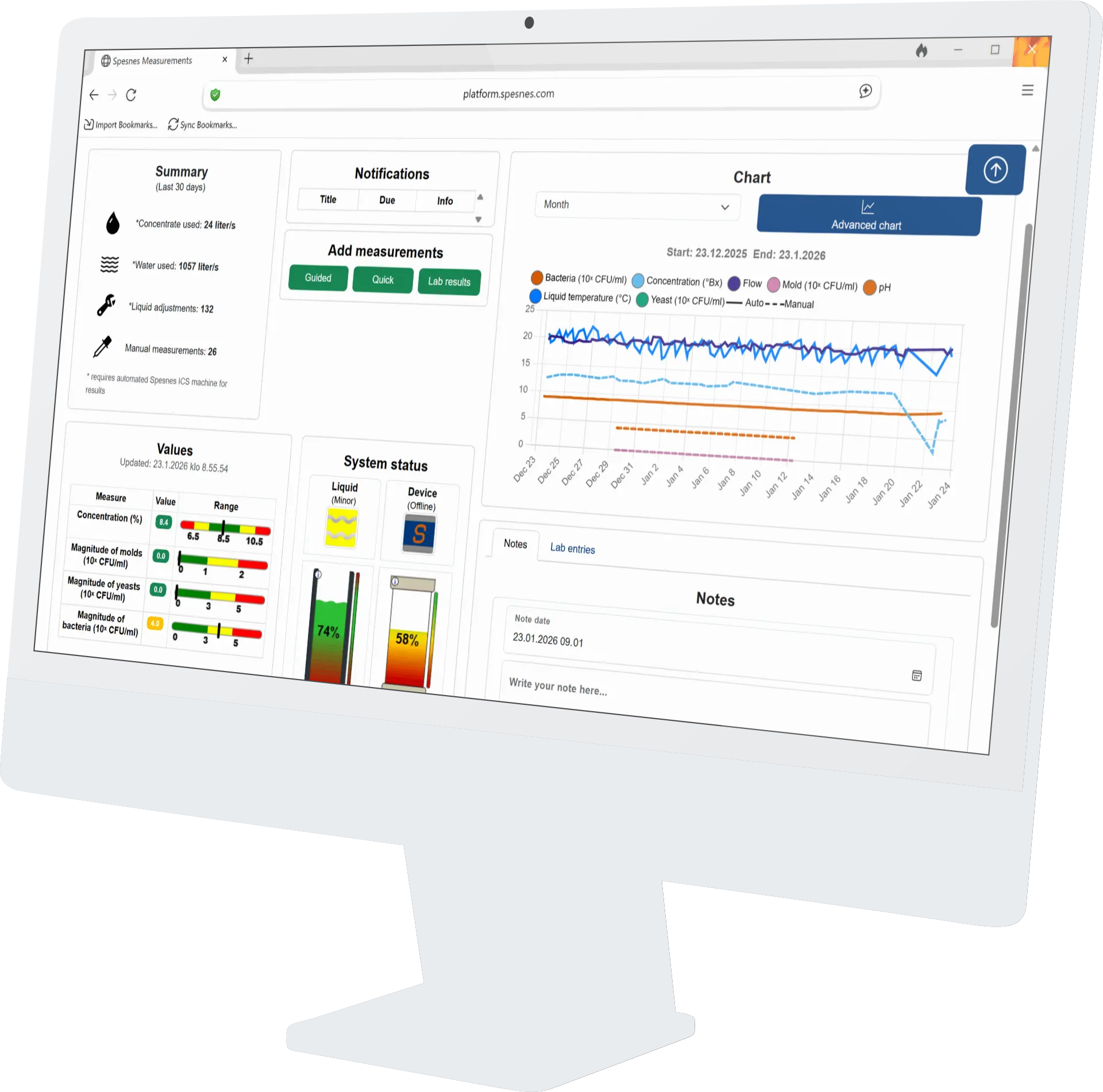
Miilumachine introduced the Spesnes Platform software, a digital pH meter and sampling strips for monitoring bacteria, as well as a Status vision display. With the help of these tools, it is easy to monitor the condition of fluids and make it visible, which makes following fluid changes and trends easy and clear. Within the company, the credentials created for different stakeholders enable everyone to monitor the condition of the machining fluids. This increases transparency and reduces unnecessary inquiries and investigations as the data is available for everyone to see.
Now every user can see at a glance:
- Fluid’s general condition with a clear traffic light model (green/yellow/red)
- Concentration of liquids, pH and bacterial levels
- Trends and changes
- Possible deviations
- Clear visual graphs
Results
The Spesnes Platform quickly made everyday life clearer, and reporting became easier in terms of occupational safety and audits.
1. Bringing up facts reduces unnecessary doubts enables early detection of problems which can be addressed on time.
When everyone has the same visual view, the conversation moves from the "I think that..." level to the "data shows that..." level. This kept the discussions fact-based and made decision-making much easier.
2. Increased awareness of the condition of fluids brings safety confidence to employees
When the fluids are in good condition thanks to factual data, it creates a safe environment for employees to work in. In this case, there is no need to worry if it is safe to work around the machines or if the liquids pose a risk of occupational diseases, such as skin or respiratory diseases.
3. Reactivity and unnecessary complaints decreased significantly. When visibility is the same for everyone and facts can be trusted, there are fewer ambiguities and interruptions at workstations. Production Manager Otto Miilukangas comments that machinists now have significantly fewer questions about fluids and confidence that the fluids are in good condition has increased. This reduces the need to investigate further, making production smoother and not causing unnecessary interruptions in production. This has a direct impact on the workload of production management.
4. Visual and well-documented fluid monitoring and maintenance process
The Spesnes Platform plays a key role in the implementation of the ISO 45001 Occupational Health and Safety (OHS) standard. As part of the system, the organisation is required to monitor and measure the realisation of tasks concerning occupational health and safety risks on a regular basis. Machining fluid exposure is a significant OHS risk, so monitoring them will significantly improve occupational safety in the machining industry.
The Finnish Institute of Occupational Health and the occupational safety and health authorities require documented and regular monitoring, among other things:
- concentrations
- pH
- deviations
- maintenance procedures
- the risk management of chemical exposures
According to the law, employers must identify the risks of employees' exposure to chemicals and take measures to reduce exposures.
Spesnes Platform automatically collects these as historical data and the results are easy to present in reports and audits. When the monitoring and documentation of liquids is regular and centralized in one place, audits are handled faster and better.
Thanks to the Spesnes service, the company can justify the responsible use of chemicals based on data. A clear, documented process and data-driven oversight can be demonstrated for audits. This improves the trust of customers and partners.
Customer feedback
“When fluid condition is continuously visible and documented, employees can trust safety. Spesnes Platform supports systematic monitoring and significantly improves occupational safety management.”
“The Spesnes Platform brought transparency to where it is needed most. When information is available to everyone, uncertainty disappears and unnecessary interruptions are reduced. Everyday life in production is clearer and calmer."
Spesnes Solutions.
Want to try? Start with Platform. It's risk-free with full 30-day money-back guarantee, if not satisfied.